

Uncategorized
Nembutal Suppository? A Comprehensive Guide to Its Medical Use, Formulation, and Legal Context.

Jan
Introduction
Nembutal Suppository. In the search for deeper knowledge on medical substances, one phrase that often prompts curiosity is: “what is a Nembutal suppository?” This question has gained traction among researchers, medical historians, pharmacists, and even policy-makers. Understanding what a Nembutal suppository is requires unpacking several interconnected aspects: drug classification, pharmaceutical formulations, therapeutic history, and the legal/ethical terrain surrounding its use.
What Is Nembutal?
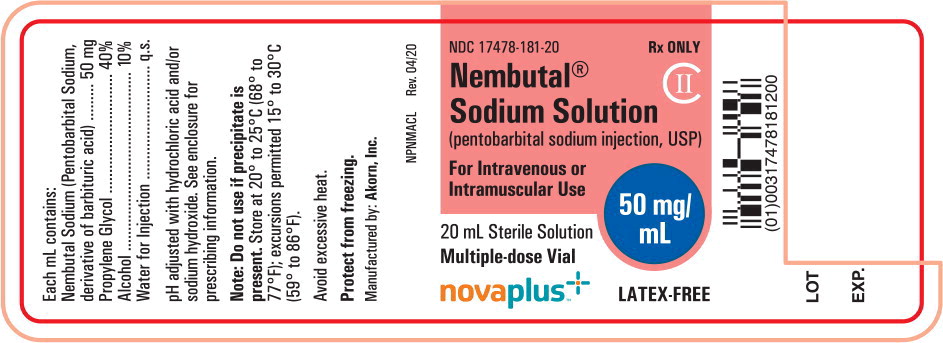
Nembutal is the brand name for pentobarbital sodium, a short-acting barbiturate first developed in the 1930s. It was widely prescribed for:
- Severe insomnia
- Seizure management
- Pre-anesthesia sedation
- Emergency control of convulsions
Its powerful central nervous system (CNS) depressant effects make it highly effective — and equally dangerous. Due to its narrow therapeutic window, Nembutal is classified as a Schedule II controlled substance in many countries, including the U.S.
What Is a Nembutal Suppository?
So, what is a Nembutal suppository exactly?
A Nembutal suppository is a pharmaceutical preparation of pentobarbital intended for rectal administration. Unlike oral tablets or intravenous forms, suppositories are designed to deliver the active ingredient via the rectal mucosa, allowing for systemic absorption.
Key Characteristics:
- Form: Solid at room temperature, melts at body temperature
- Route: Rectal (for patients unable to ingest or inject)
- Use Cases: Palliative sedation, seizures, alternative to IV in veterinary euthanasia
Why Use a Suppository?
- Patients who are vomiting or unconscious can’t take oral medications.
- Rectal absorption avoids the first-pass effect in the liver, leading to faster action.
- In jurisdictions where it is legal, suppositories have been used in palliative care for terminally ill patients.
Thus, what is a Nembutal suppository can be best answered as: a rectally-administered form of pentobarbital, formulated for specific medical or end-of-life use when oral or IV methods are unavailable or inappropriate.
Pharmacology of Pentobarbital (Nembutal)
- Class: Barbiturate
- Mechanism: Enhances GABA-A receptor activity → CNS depression
- Onset: Rapid (5–10 min via rectal route)
- Duration: 3–6 hours (dose-dependent)
- Half-Life: 15–50 hours depending on age and liver function
Understanding what is a Nembutal suppository requires grasping how pentobarbital functions once absorbed. It slows brain activity, inducing sedation, hypnosis, or coma — depending on dosage.
Historical and Modern Uses
Medical Applications (Historical and Present)
| Use Case | Description | Status |
|---|---|---|
| Insomnia treatment | Prescribed as a sleeping aid in mid-20th century | Obsolete |
| Seizure control | Emergency drug for status epilepticus | Rarely used |
| Pre-operative sedation | Anesthesia induction in surgeries | Replaced |
| Euthanasia (veterinary) | Lethal injection in animal medicine | Legal & common |
| Palliative sedation (human) | End-of-life care in select jurisdictions | Conditional |
Legal and Ethical Considerations
Legality of Nembutal
The answer to what is a Nembutal suppository often intersects with legal concerns. Here’s a quick breakdown:
| Country | Legal Status of Nembutal Suppositories | Notes |
|---|---|---|
| United States | Schedule II Controlled Substance | Prescription-only; rarely used in human medicine |
| Canada | Schedule IV | Very restricted; monitored in end-of-life protocols |
| Australia | Schedule 8 (Controlled) | Permitted under Voluntary Assisted Dying (VAD) in some states |
| Switzerland | Legal in assisted dying | Administered under strict physician supervision |
| Netherlands | Legal in euthanasia | Must meet strict regulatory requirements |
Ethical Perspectives
- Proponents argue Nembutal suppositories offer a compassionate end-of-life option.
- Opponents warn of misuse, coercion, or non-consensual use.
- The World Health Organization (WHO) lists pentobarbital as essential in animal medicine, but not in human formularies.
Risks and Safety Concerns
Side Effects of Pentobarbital
- Respiratory depression
- Hypotension
- Coma
- Cognitive impairment
- Dependence and withdrawal (with prolonged use)
Dangers of Misuse
A major reason for the controlled status of pentobarbital is its use in suicides. Overdose is often fatal, and there is no effective antidote. As such, health agencies across the globe restrict its use tightly.
Statistical Overview: Barbiturate Use and Regulation (2024 Data)
| Metric | Value | Source |
|---|---|---|
| Global barbiturate prescriptions (2024) | 1.3 million | WHO/IMS Health |
| Pentobarbital seizure incidents (U.S.) | 980+ | DEA 2024 Report |
| Countries permitting medical aid in dying | 11 | Global End-of-Life Policy Center |
| Veterinary use in euthanasia (%) | 92% | American Veterinary Assoc. |
| Barbiturate-related deaths (U.S. 2023) | ~1,200 | CDC/NCHS |
Why Is the Suppository Form So Rare?
Now that we’ve addressed what is a Nembutal suppository, it’s vital to understand its rarity.
- Most hospitals prefer IV access for barbiturates.
- Compounding pharmacies are required to formulate suppositories — not commercially available.
- Legal barriers prevent mass production.
It’s also less convenient and less precise in dose control, though still used in specific palliative or veterinary cases.
Pharmaceutical Alternatives
If you’re asking what is a Nembutal suppository in search of functional alternatives, consider:
- Midazolam (benzodiazepine)
- Phenobarbital (longer-acting barbiturate)
- Propofol (short-term anesthesia)
- Chloral hydrate (for pediatric sedation — rare now)
Conclusion: Final Thoughts on What Is a Nembutal Suppository
To summarize, the answer to what is a Nembutal suppository lies at the intersection of pharmacology, medicine, law, and ethics. It is a rectal form of pentobarbital used rarely in modern medicine, sometimes still used in palliative care, seizure management, or veterinary medicine.
While it serves specific medical purposes, its association with euthanasia and assisted dying has led to intense legal scrutiny and ethical debate. It’s tightly controlled and not widely available for human use except under very specific and regulated conditions.
